
How to organize a small laundry area
Laundry is the chore that never ends, and a messy laundry area makes it feel even longer. The good news is that this is one of the easiest spaces to organize. It has a clear job, a few repeating items and a lot of unused wall space. Whether you have a full laundry room, a closet with a stacked washer and dryer or just a corner of the hallway, the same ideas work.
Short on time? Start with the sections on storing detergent and keeping the dryer safe, since those two are about safety, not tidiness. The rest is a morning’s setup of two or three hours.
In this guide · 16 sections
- Start by clearing it out
- Plan around how you do laundry
- Sorting without a fuss
- Use the walls
- Store laundry products safely
- Keep the dryer safe
- Make folding painless
- Spread laundry across the week
- Check the care label first
- Use the right product on each surface
- Keep it clean
- Make a tiny stain kit
- A spot for ironing or steaming
- A quick setup checklist
- Laundry questions, answered
- Sources and further reading
Start by clearing it out
Take everything off the shelves and out of the cabinets. Pull out the stray socks, the single hangers, the empty bottles and the stain removers that have been drying up since last year. Group what’s left into piles:
- Laundry products you use now: detergent, stain remover, fabric softener, dryer sheets or wool dryer balls.
- Cleaning supplies that ended up here: these usually belong in a separate cleaning spot.
- Items that don’t belong at all: toys, tools, paperwork, seasonal decorations.
Throw out empty or crusty bottles, and put everything that lives elsewhere back where it belongs. You’ll be surprised how much space this frees up.
Plan around how you do laundry
A laundry area works best when it follows the flow of the work: sort, wash, dry, fold, put away. Think of it as a short assembly line.
- Sorting. Somewhere to drop dirty clothes, ideally right where they’re sorted.
- Washing. Detergent and stain treatments within reach of the machine.
- Drying. A spot to hang delicates, and the dryer’s lint trap clear.
- Folding. A flat surface, even if it’s just a board across the machines.
- Putting away. A basket per person, so folded clothes go straight to their rooms.
Sorting without a fuss
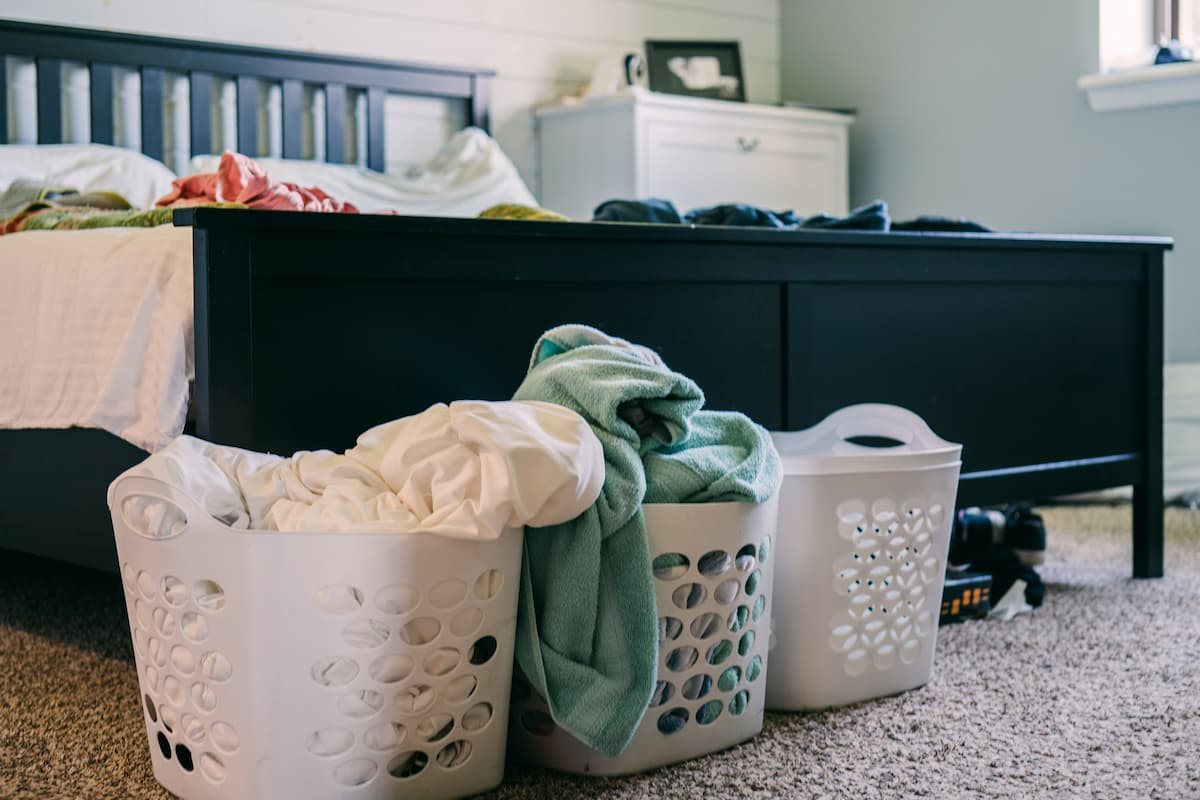
A system that’s too complicated won’t last. The simplest is two or three baskets, labeled or in different colors: whites, darks and colors, with delicates in a mesh bag. If space is tight, a tall hamper with divided sections takes up the footprint of a single basket. A hanging bag on the back of a door is another option for apartments.
Give every household member their own basket for clean, folded clothes. You carry the basket to the room once, and nobody has to hunt through a pile.
Use the walls
If the floor space is small, go up. These are the ideas that make the biggest difference.
- A shelf above the machines. It’s the best-value upgrade. Put your daily-use products at eye level and extras above.
- Hooks and a hanging rod. Hang clothes straight out of the dryer so they don’t wrinkle, and add a few hooks for bags, aprons or a drying line.
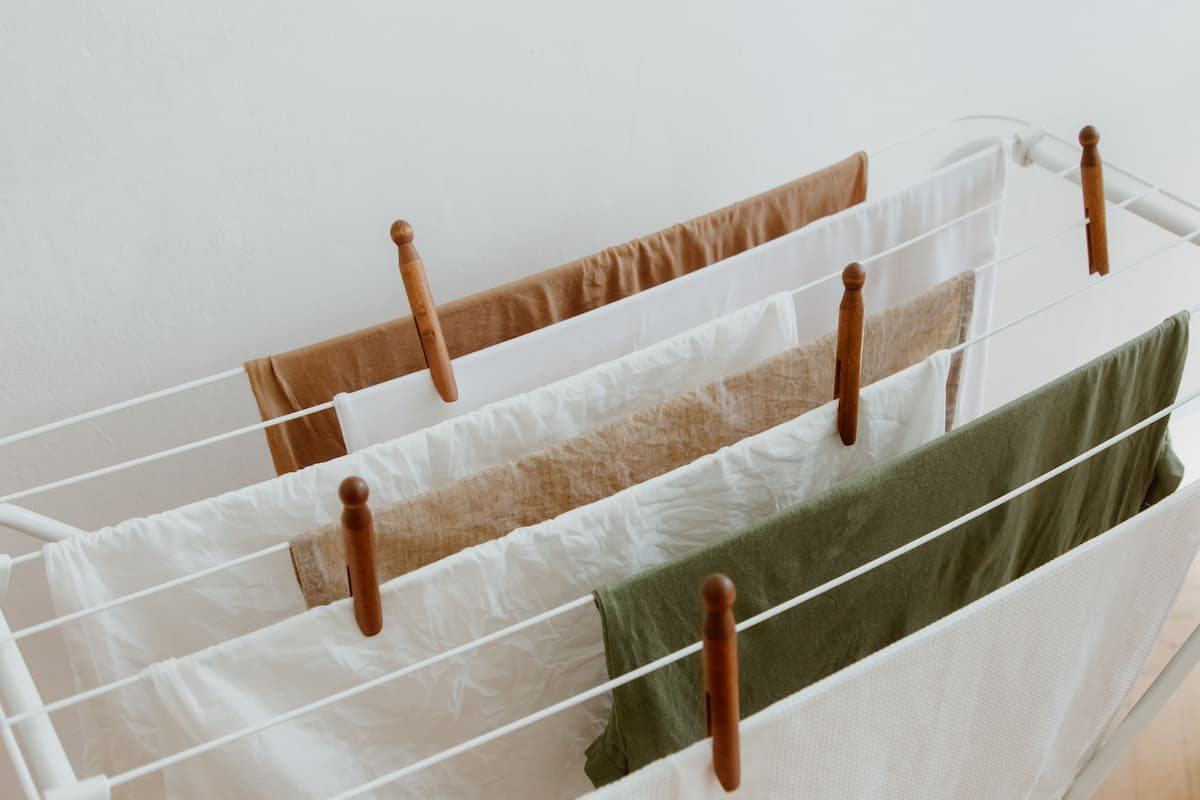
- A foldable drying rack. Choose one that hangs on the wall or folds flat and slides into the gap beside the machines.
- A narrow rolling cart. It fits in a 6-inch gap between the washer and the wall, and holds detergent and spare supplies.
- Over-the-door organizers. Pockets are ideal for stain sticks, lint rollers and socks that lost their partners.
Store laundry products safely
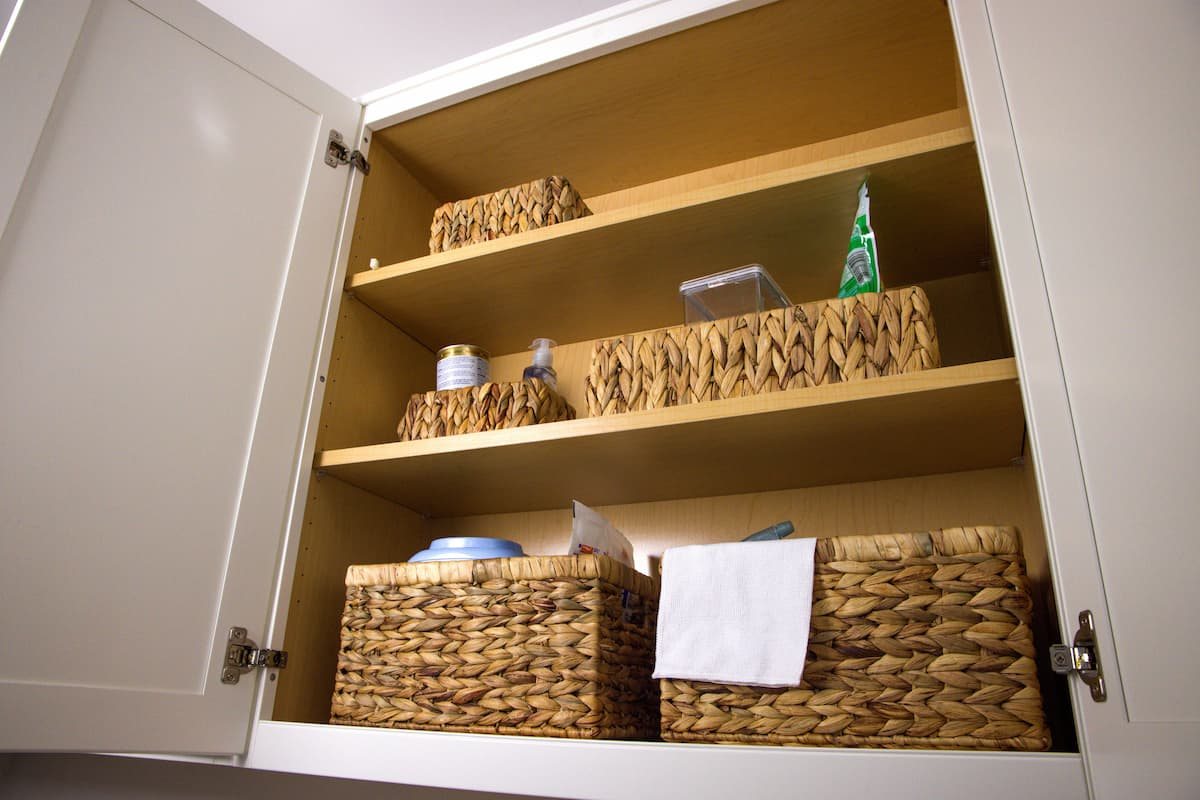
Laundry products are concentrated cleaning chemicals, so where you keep them matters. The Cleaning Institute’s home safety guide recommends keeping laundry products in their original packaging and storing them out of reach of young children to prevent accidental exposure. It also suggests installing safety locks on cabinets where possible, and notes that magnetic locks are less visible. Using baskets or bins can make products less visually appealing to kids, and labeling each bin helps you find what you need.
Two more rules matter:
- Don’t transfer products to other containers. The same guide says never to decant or remove products from their original container, since the original label has the safety information and a drink bottle can cause a dangerous mix-up.
- Don’t mix laundry or cleaning products. In particular, never combine bleach with ammonia or acidic cleaners. The fumes can be harmful. Read the label of each product.
The Cleaning Institute’s guide suggests using clear canisters only for non-hazardous items, such as clothespins, wool dryer balls or microfiber towels. If you like the look of glass jars, keep them for those, not for detergent.
Keep the dryer safe
An organized laundry area should also be a safe one, and the dryer is the main thing to watch. The North Carolina Office of State Fire Marshal’s clothes dryer safety guidance includes these basics:
- Clean the lint filter before or after every load, and remove lint that has collected around the drum.
- Clear the vent pipe at least once a year, or sooner if clothes take longer than usual to dry. Slow drying is a classic sign of a clogged vent.
- Don’t dry clothes that have touched flammable substances such as gasoline or paint thinner. Let them air out outdoors before washing and drying normally.
- Turn the dryer off when you leave the house or go to bed.
It’s also smart to keep the area around the dryer clear of paper, boxes and anything flammable. A tidy laundry area is easier to keep safe.
| Task | When |
|---|---|
| Clean the lint filter and remove lint around the drum | Before or after every load |
| Clear the vent pipe | At least once a year, or sooner if clothes take longer than usual to dry |
| Air out clothes that touched gasoline or paint thinner | Outdoors, before normal washing and drying |
| Turn the dryer off | When you leave the house or go to bed |
Source: North Carolina Office of State Fire Marshal clothes dryer safety guidance, as described above.
Make folding painless
Folding goes faster when you have a flat spot. A countertop works, and so does a sturdy board that rests across the top of the machines. Fold as soon as clothes come out of the dryer, since warm clothes crease less. Fold into the basket for each person, and hang what should hang.
If socks go missing, put a small basket on the shelf for orphans. When a sock’s partner turns up, you’ll find them together. Anything left after a month goes to rags.
Spread laundry across the week
Laundry piles up into a monster when it’s all saved for one day. Doing one or two loads on a regular weekday keeps the baskets from overflowing and keeps weekends free. It also helps with the space problem, since a smaller pile needs a smaller area to sort and fold.
Check the care label first
Before you toss something in, check the tag. Care labels tell you the right water temperature, cycle and drying method for that fabric. If you aren’t sure, wash delicate items on a gentle cycle in a mesh bag and let them air-dry. Sort by color and by fabric weight, so towels don’t shed lint on dark shirts.
Use the right product on each surface
When you wipe down the machines and shelves, remember that no single cleaner suits every surface. Painted metal, stainless steel, plastic and wood need different care, and a strong product can dull or damage a finish. Read the label, test on a small hidden spot and use only what the product is made for. As above, never mix cleaning products, especially bleach with vinegar, ammonia or other cleaners.
Keep it clean
Wipe down the machines and the shelves when you’re cleaning the rest of the house. Leave the washer door or lid open between loads so it can air out, which helps prevent musty smells. Check the lint filter every time and empty the trash. A five-minute reset once a week is enough.
If the laundry area opens onto the hallway or entry, our guide to entryway organization pairs well with it, and so does decluttering your closet, since fewer clothes means less laundry.
Make a tiny stain kit
Stains are easier to remove when you treat them quickly. Keep a small basket or caddy with a stain stick or spray, a soft brush, a few clean cloths and a pencil to mark where a stain is. Read the care label on the garment and on the stain product before you use it. And don’t put a stained item in the dryer until the stain is gone, since the heat can set it permanently. Keep the stain kit with the laundry products, in the same safe place, out of children’s reach.
A spot for ironing or steaming
If you iron or steam, you don’t need a dedicated room. A slim over-the-door ironing board hanger or a wall-mounted fold-down board keeps the tools off the floor. Always unplug the iron and let it cool before you put it away, and store it where kids can’t reach the cord.
A quick setup checklist
- Clear everything out and throw away what’s empty or expired.
- Set up two or three sorting baskets.
- Add a shelf above the machines and a rod or hooks for hanging.
- Store detergent in its original container, out of reach of children, with a lock if possible.
- Make a flat folding spot and give everyone a basket.
- Clean the lint filter every load and the vent once a year.
Laundry questions, answered
How do I organize a very small laundry area?
Use the walls: a shelf above the machines, hooks or a hanging rod, a foldable drying rack and over-the-door pockets. Keep two or three sorting baskets or a divided hamper, and give each person a basket for clean clothes.
Where should I store laundry detergent?
The Cleaning Institute recommends keeping laundry products in their original packaging and out of reach of young children, with safety locks on cabinets where possible.
Should I pour detergent into a nicer container?
No. The Cleaning Institute’s guide says never to decant or remove products from their original container. Use clear canisters only for non-hazardous items like clothespins or dryer balls.
How often should I clean the dryer lint filter?
Before or after every load. The North Carolina Office of State Fire Marshal also says to clear the vent pipe at least once a year, or sooner if clothes take longer than usual to dry.
What should I not put in the dryer?
Clothes that have come into contact with flammable substances such as gasoline or paint thinner. Let them air out outdoors before washing and drying normally.
Is it safe to run the dryer when I’m out?
The fire marshal’s guidance says to turn the dryer off when you leave home or go to bed.
Sources and further reading
Product storage and child-safety advice follows the Cleaning Institute’s Home Safety Guide. Dryer lint, vent and flammable-substance advice follows the North Carolina Office of State Fire Marshal’s Clothes Dryer Safety sheet. The layout, basket and shelf ideas are practical household advice rather than tested method. For specific products, always follow the label.
Keep reading
 Home Organization · 8 min readHow to declutter your closet in one afternoonA kind, practical plan to clear a closet in one afternoon without regret.
 Home Organization · 8 min readHow to organize a small bathroomPractical ways to organize a small bathroom, from clearing out old products to using vertical space.
 Home Organization · 7 min readEntryway organization ideas for small spacesSimple ideas to keep a small entryway tidy using walls, hooks and a few smart habits.