
How to get rid of a smelly dishwasher, step by step
A dishwasher is supposed to leave the kitchen smelling cleaner, not like a damp basement. If yours has started to smell sour, musty or like old food, the cause is almost always something you can find and fix in about half an hour, and it usually isn’t the thing you’d expect.
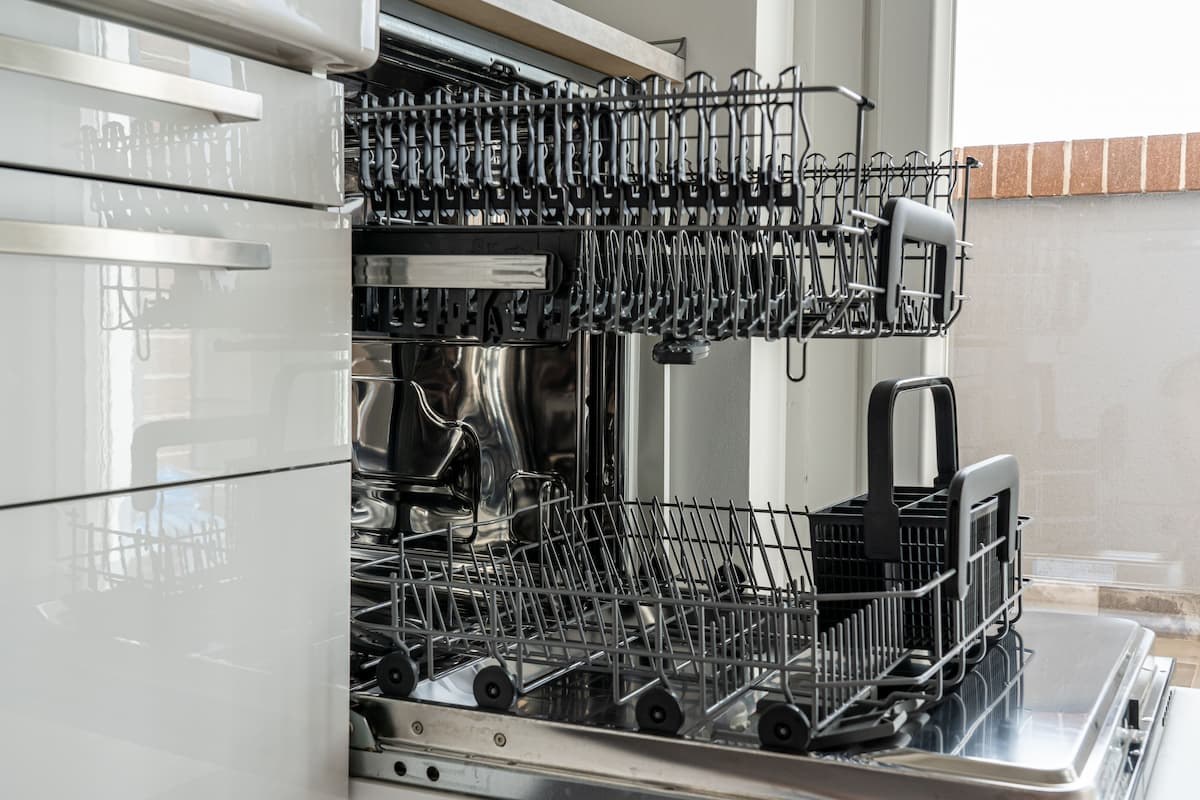
This guide walks through why dishwashers smell, how to clean the filter, spray arms, door seal and drain area, how to run a cleaning cycle without damaging the machine, and how to keep the smell from coming back. It follows guidance from two dishwasher makers, Whirlpool and Samsung, and one rule matters more than everything else: your own manual wins. Models differ, so check yours before you take anything apart.
In this guide · 13 sections
- Why dishwashers start to smell
- Before you start
- Step 1: Clean the filter
- Step 2: Clean the spray arms and drain area
- Step 3: Wipe the door seal
- Step 4: Run a cleaning cycle
- Step 5: Check the hot water
- Step 6: Check the sink and the drain hose
- Mistakes that make the smell worse
- Is the smell a sign of a bigger problem?
- How to keep the smell away
- A simple monthly routine
- Dishwasher smell questions
Why dishwashers start to smell
Whirlpool’s guidance lists the usual suspects: a dirty or clogged filter, food residue on the interior walls, mold or mildew on the door gasket and a clogged drain. Samsung’s support page adds a few more. Mold and mildew need moisture, warmth and food, and a dishwasher can offer all three. Soiled dishes left sitting inside while you wait for a full load can leave a smell that lingers after washing, and so can water left in the machine after a cycle.
The odor can also come from somewhere else. Samsung points out that it may be coming from the sink drain or the garbage disposal the dishwasher is connected to, not the dishwasher itself.
Before you start
- Read the manual. Whirlpool says to consult your product manual before removing the filter, because removal varies by model.
- Empty the dishwasher. Take out all dishes, glasses and utensils.
- Have a few things ready: a soft brush (an old toothbrush works), a sponge, warm soapy water, a clean towel and white vinegar.
- Turn off the power to the machine if your manual recommends it before you reach into the tub.
Step 1: Clean the filter
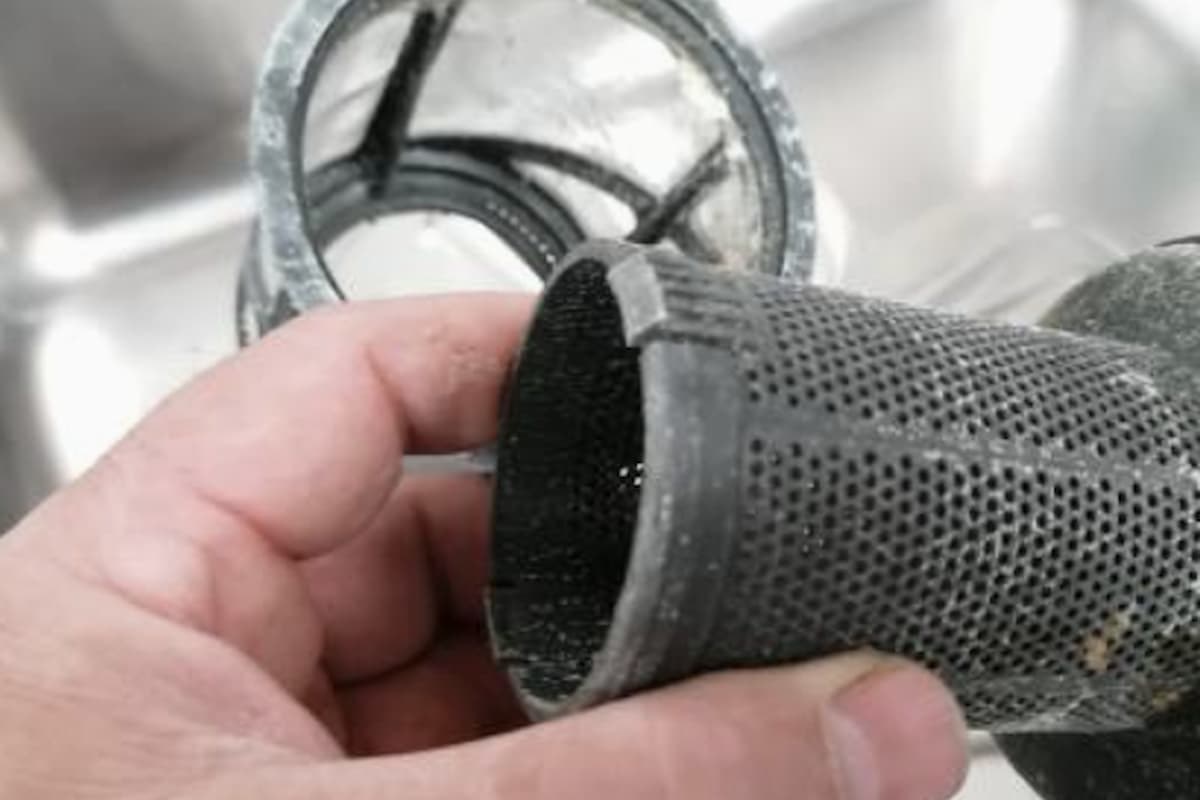
This is the most common fix. Pull out the bottom rack and find the filter at the base of the tub. Remove it following your manual. Samsung says to take the filter apart if it comes apart and clean each piece. Whirlpool suggests soaking the filter in warm, soapy water and using a soft-bristled brush on stuck-on debris. Rinse it well and put it back exactly as it came out. A filter that isn’t seated properly can cause its own problems.
Whirlpool recommends cleaning the filter at least once a month. If you cook a lot or don’t rinse plates much, once a month isn’t too often.
Step 2: Clean the spray arms and drain area
Samsung’s instructions also tell you to remove the racks and nozzles. Clean the drain area and the filter housing with warm, soapy water. If the holes in the spray arms are clogged, clear them with a thin, pointed object such as a toothpick. Check that each hole opens freely. Then reattach the arms.
Step 3: Wipe the door seal
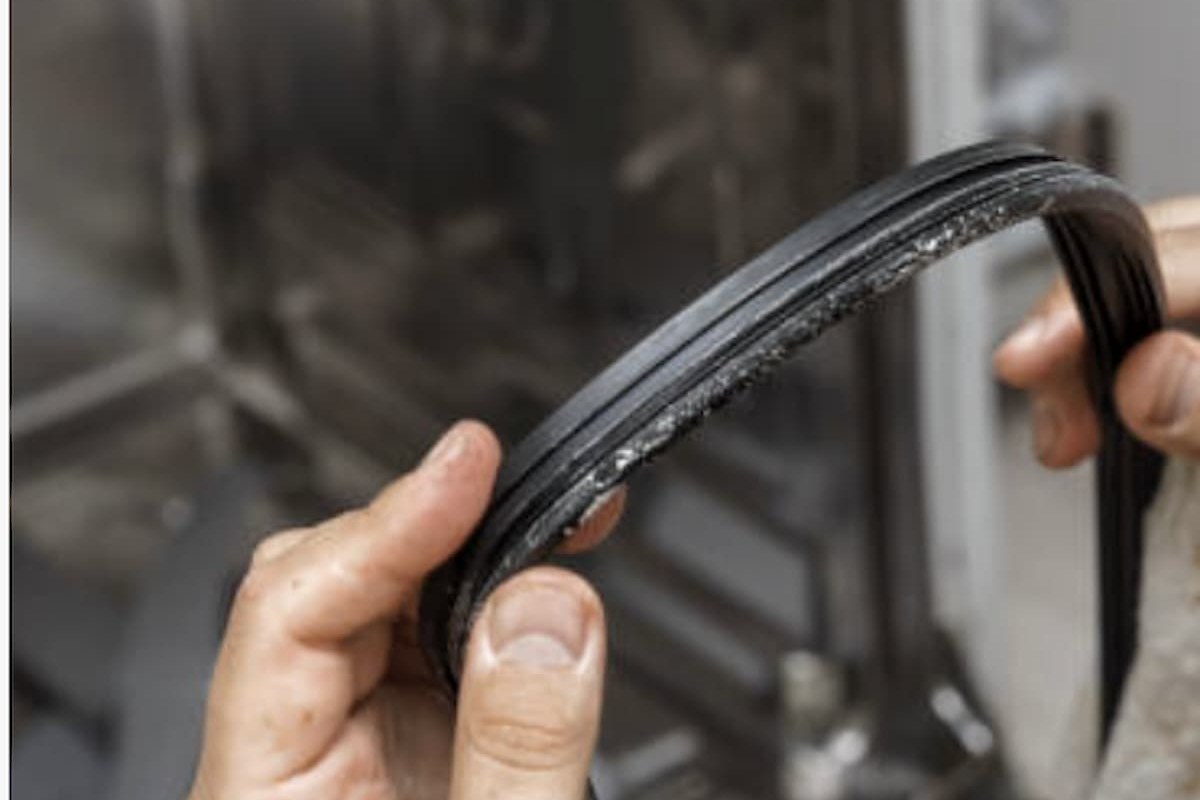
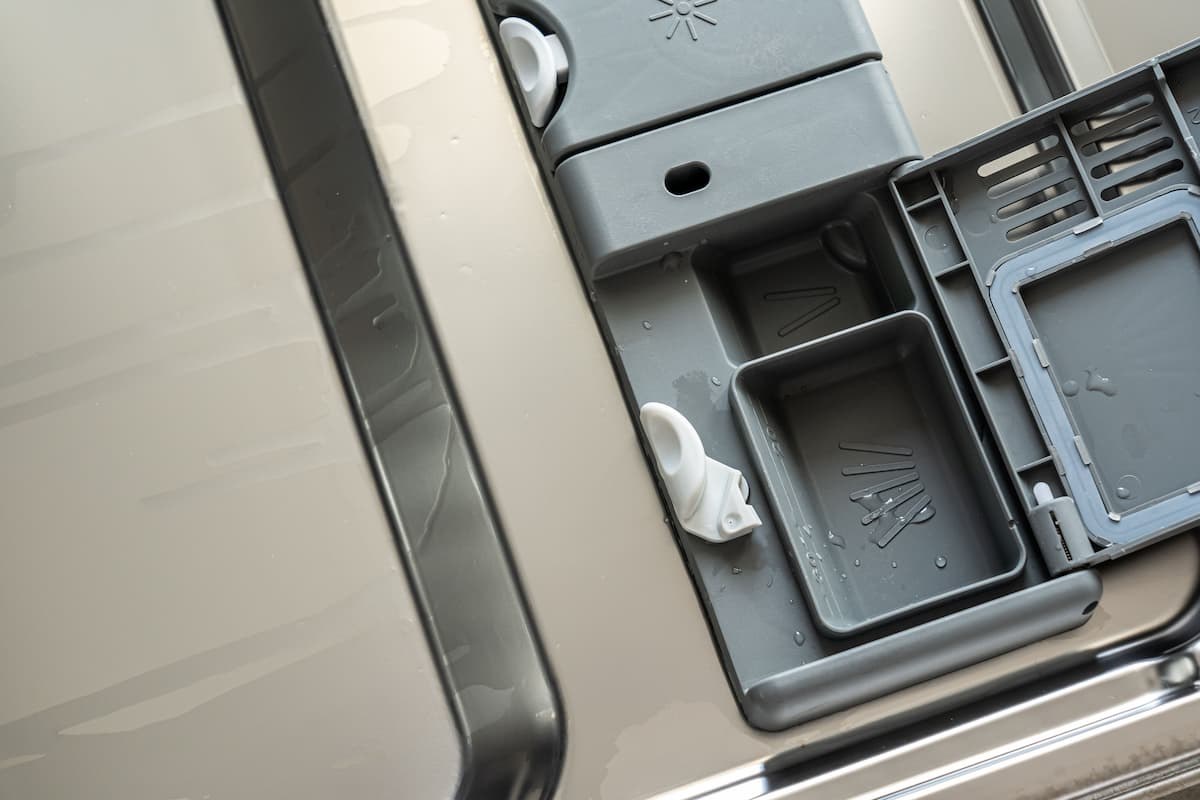
The rubber seal around the door is a favorite hiding place for mold and mildew. Whirlpool says to wipe the gasket with a sponge and warm, soapy water, then dry it with a clean towel. Samsung says to clean the door seal with white vinegar. Both work. Run your sponge along the entire seal, including the bottom edge where water collects, and check the detergent compartment while you’re there.
Step 4: Run a cleaning cycle
With the machine empty and the filter back in place, run a cleaning cycle. The two makers suggest slightly different methods:
- Whirlpool: Put 2 cups of white vinegar in a dishwasher-safe bowl on the bottom rack and run a cycle with an air-dry or energy-saving dry option.
- Samsung: Use chlorine-based detergent, white vinegar (about 8 ounces in a dishwasher-safe glass on the bottom rack) or a dishwasher cleaning tablet. Afterward, wipe any residue and leave the door slightly open.
- Either maker: Many brands sell a dishwasher cleaner designed for the job. Whirlpool suggests using one about once a month.
| Method | How | Notes |
|---|---|---|
| Whirlpool: vinegar | 2 cups white vinegar in a dishwasher-safe bowl on the bottom rack | Run a cycle with an air-dry or energy-saving dry option |
| Samsung: vinegar | About 8 ounces in a dishwasher-safe glass on the bottom rack | Or use chlorine-based detergent or a cleaning tablet |
| Dedicated cleaner | Follow the product label | Whirlpool suggests about once a month |
Step 5: Check the hot water
Samsung suggests running the hot water at the sink and timing how long it takes to get hot. If it takes more than a short while, the water heater may need attention. Samsung says water heater temperature should be set between 120°F and 149°F, and if it’s set correctly but the water still isn’t hot, a plumber should take a look. Lukewarm water cleans poorly and leaves grease behind, and grease holds odors.
Step 6: Check the sink and the drain hose
If the smell is still there, look beyond the tub. Samsung says to clean the sink drain or garbage disposal, and if the smell persists, to see a plumber before cleaning the dishwasher again. It also says to check that the drain hose connection is straight, not pinched, kinked, bent or damaged. Whirlpool says a persistent smell may point to a clog in the drain hose, which it describes as a job for a technician. Standing water at the bottom after a cycle is a sign the machine isn’t draining.
Mistakes that make the smell worse
- Masking it. Scented tablets or sprays can cover a smell for a day while the cause, usually a full filter, stays put.
- Closing the door on wet dishes and leftover water. A sealed, damp tub is exactly what mildew likes.
- Waiting for a full load with dirty dishes inside. Samsung notes that soiled dishes left sitting can cause a smell that lingers after washing. If your household is small, scrape plates and run a short cycle sooner, or rinse and stack until you’re ready.
- Skipping the filter because “it cleans itself.” Some models have self-cleaning filters and some don’t. Your manual says which you have.
- Mixing cleaners. Vinegar followed by bleach, or bleach with an ammonia cleaner, is a safety problem, not a stronger clean.
Is the smell a sign of a bigger problem?
Usually not. In most cases the fix is a dirty filter, a grimy seal or a drain that needs attention, and none of it means your machine is on its way out. A few signs are different: water that stays at the bottom after a full cycle, a burning smell, leaks, or error codes. Those are worth a call to a technician, and you can share which steps you’ve already tried.
How to keep the smell away
- Don’t overload. Whirlpool says overcrowded racks stop water and detergent from reaching everything.
- Run a rinse cycle between partial loads. Samsung suggests this if dishes wait a day or two.
- Leave the door slightly open when the machine is not running, so the inside can dry.
- Wipe the tub and door after a cycle when you can, as Samsung suggests.
- Scrape, don’t rinse everything. Remove large scraps, but you don’t need to wash plates before loading. Most modern machines are designed to handle food residue.
- Clean the filter monthly and use a dishwasher cleaner about once a month.
A simple monthly routine
- Empty the machine and pull out the bottom rack.
- Remove and clean the filter.
- Check and clear the spray arm holes.
- Wipe the door seal and detergent compartment, then dry.
- Run one cleaning cycle with the method your manual allows.
- Wipe the inside of the door and leave it slightly open.
While you’re cleaning in the kitchen, it’s worth working in a sensible order, from top to bottom. We explain how in our guide to cleaning your kitchen in the right order. If you’re thinking about the rest of the kitchen, organizing your cabinets can make loading the dishwasher easier too.
Dishwasher smell questions
Why does my dishwasher smell bad?
Whirlpool lists a dirty or clogged filter, food residue on the interior walls, mold or mildew on the door gasket and a clogged drain. Samsung adds dirty dishes left inside, leftover water, clogged nozzles and odors that come from the connected sink drain or garbage disposal.
How often should I clean the dishwasher filter?
Whirlpool says at least once a month. Check your manual for how to remove it, because it varies by model.
Can I use vinegar to clean my dishwasher?
Both Whirlpool and Samsung describe a vinegar cleaning cycle: Whirlpool uses 2 cups in a dishwasher-safe bowl on the bottom rack, and Samsung uses about 8 ounces in a dishwasher-safe glass. Samsung says not to use detergent and vinegar at the same time. Check your manual first.
Is it safe to use bleach in a dishwasher?
Samsung says not to use bleach in a dishwasher with a stainless steel interior, because it can damage or discolor it, and says most of its machines have one. Never mix bleach with vinegar, ammonia or other cleaners. Follow your manual.
What if the smell comes back after cleaning?
Check the sink drain or garbage disposal, the drain hose connection and the water temperature. If there’s standing water or error codes, call a technician. A clogged drain hose is a job for a professional.
How do I stop a dishwasher from smelling?
Don’t overload it, run a rinse cycle between partial loads, wipe the tub and door, leave the door slightly open when it’s not in use, and clean the filter and run a cleaner about once a month.
Sources and further reading
The causes of dishwasher odor, filter cleaning, the monthly schedule, the 2-cup vinegar cycle, gasket cleaning and the advice to avoid overloading follow Whirlpool’s Dishwasher Smells Bad guide. The other possible causes, spray-arm and drain-area cleaning, the 8-ounce vinegar and bleach cautions, hot-water check, drain-hose check and prevention tips follow Samsung’s support page on a smelly dishwasher. These are manufacturer pages for their own products, so your own manual takes priority. The warning not to mix cleaning products is general safety advice. Scraping rather than rinsing is common practice and not from the sources above.
Keep reading
 Kitchen · 7 min readHow to clean your kitchen in the right orderA simple top-to-bottom kitchen cleaning order, the difference between cleaning and sanitizing, safe bleach use, sponge care and a daily, weekly and monthly schedule.
 Kitchen · 12 min readHow to organize kitchen cabinets: 10 practical ways to gain more spaceTen practical ways to organize kitchen cabinets and gain space: work one cabinet at a time, set up zones, tame deep shelves and keep the order going.
 Kitchen · 7 min readHow to keep cutting boards clean and odor-freeSimple steps to clean, sanitize and care for wood and plastic cutting boards.