
How to clean your kitchen in the right order
Most people clean the kitchen in whatever order they happen to notice things: the counter first because it’s in the way, then the floor, then, three days later, the dusty top of the cabinets that shed crumbs onto the clean floor. There’s a better way, and it takes the same amount of effort. You just do it in the right order.
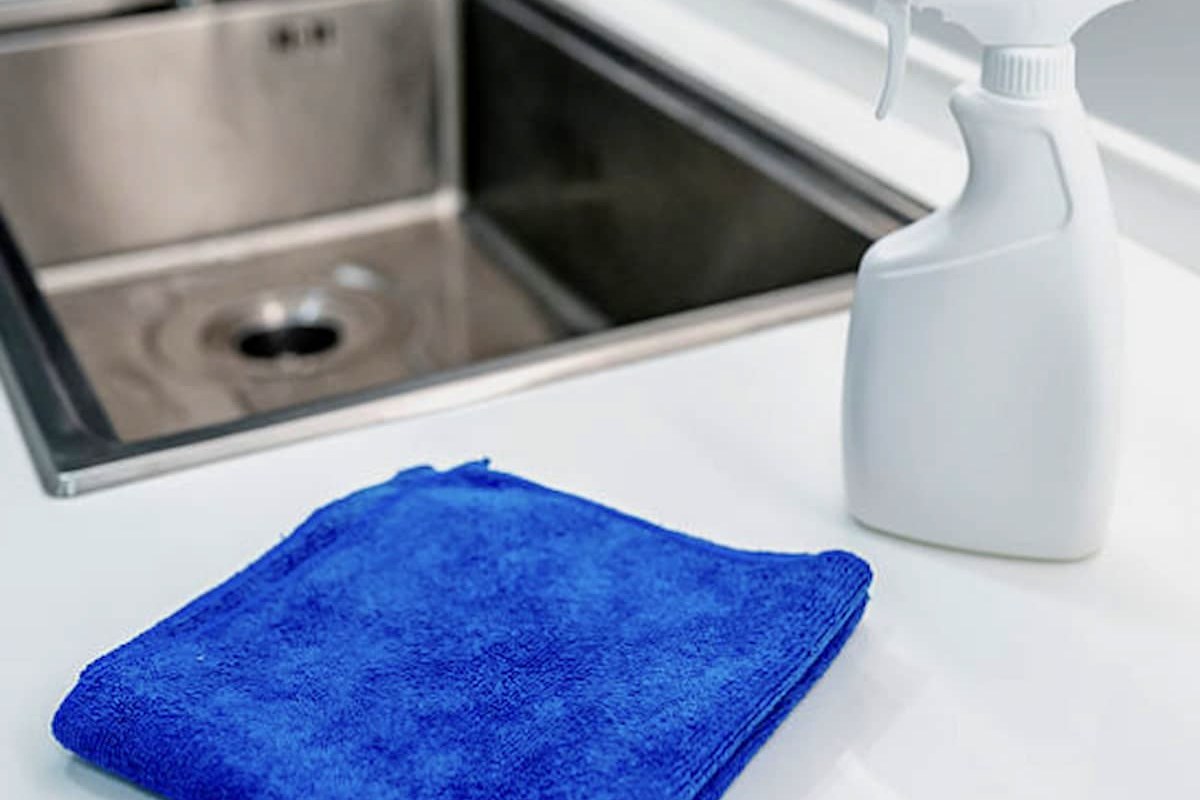
This guide gives you a simple order for cleaning the kitchen from top to bottom, explains the difference between cleaning and sanitizing, covers which surfaces need what, and sets out a daily, weekly and monthly rhythm so it never turns into a whole-day project. The safety and sanitizing guidance comes from University of Illinois Extension. The top-to-bottom order is a practical habit, and we say so below.
In this guide · 10 sections
The big idea: top to bottom
Dust, crumbs and drips fall down. If you clean the floor first and the shelves last, you end up cleaning the floor twice. Working from the highest surfaces to the lowest means each surface only has to be cleaned once. This isn’t a rule from a food-safety agency. It’s just how gravity works, and it’s how Fatih does it at home.
The order, step by step
- Clear the surfaces. Put away anything that doesn’t belong, load the dishwasher and empty the sink. You can’t clean around clutter.
- Cabinet tops and high shelves. Wipe with a dry or slightly damp cloth. It’s the dustiest, least-used surface, so it only needs a quick pass every few weeks.
- Counters and small appliances. Move the toaster and coffee maker, wipe the counter and put things back. Wipe the outside of small appliances too.
- Stove and the area around the hood. Wipe the cooktop, knobs and the wall behind it, where grease collects.
- Cabinet doors and handles. Handles are the spots hands touch most often. Wipe the doors near the stove first, where splatter lands.
- Sink and faucet. Do the sink after the rest, because it collects everything you’ve rinsed out of your cloth.
- Floor. Sweep or vacuum, then mop. This goes last, because it catches everything that fell.
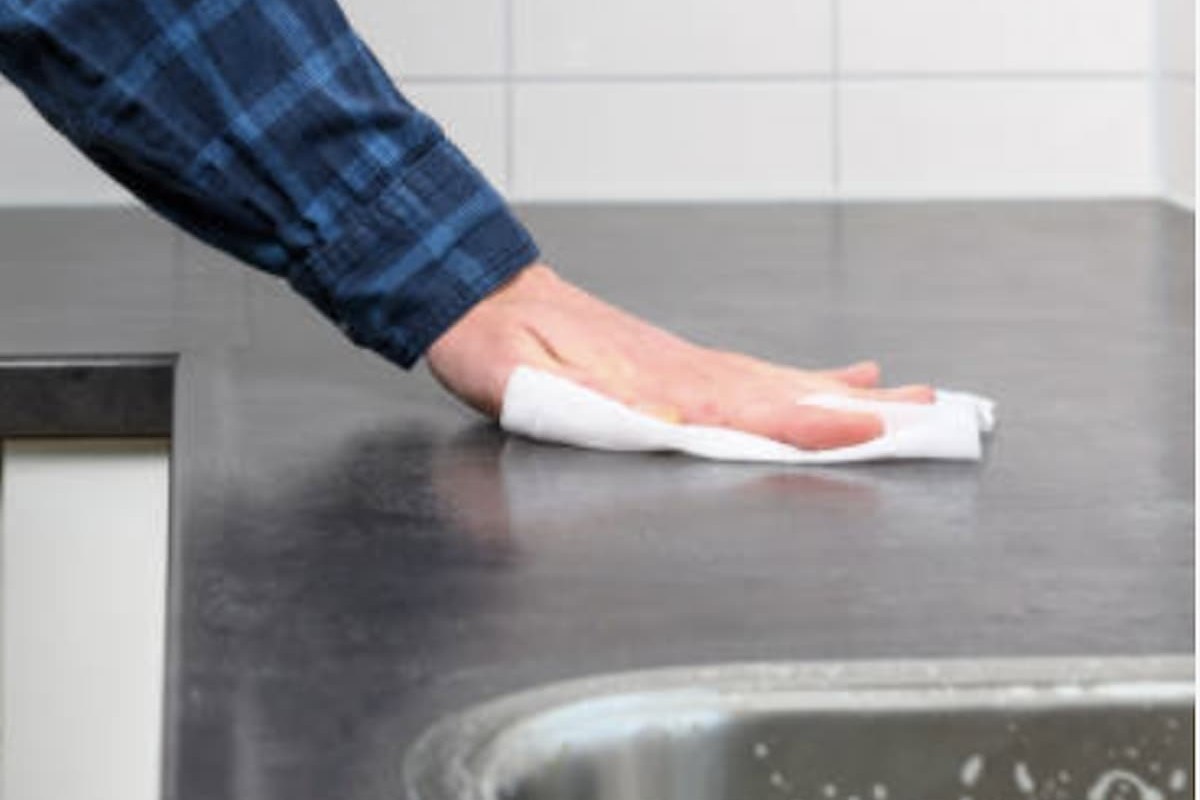
Clean first, then sanitize
This is the part that matters for food safety. Cleaning and sanitizing aren’t the same thing. University of Illinois Extension’s guidance is to clean first, washing surfaces, sinks and appliances with hot, soapy water to remove dirt and some bacteria. Then sanitize. It explains why the order matters: food particles and grime can deactivate bleach, so a surface has to be clean before the sanitizer can do its job.
For surfaces that touch food, such as counters where you prepare meals and cutting boards, a sanitizing step is worth it after cleaning. For things like cabinet doors and the outside of appliances, soap and water is normally enough.
How to make and use a bleach sanitizer
Illinois Extension’s kitchen sanitizer uses plain, unscented liquid household bleach and cool water, because hot water deactivates bleach. It gives two equivalent amounts, drawn from CDC guidance: 4 teaspoons of bleach per 1 quart of water, or 5 tablespoons (about 1/3 cup) per 1 gallon. Bleach strengths vary by product, so read your bottle’s label and follow its directions if they differ. Apply the solution to the already clean surface and let it air dry. The extension doesn’t call for wiping it off.
- Mix a fresh batch. If the solution is more than a day old, make a new one.
- Use cool water and unscented bleach, not scented or gel products.
- Never mix bleach with ammonia. The extension is blunt about it. As general safety advice, don’t mix bleach with any other cleaner.
- Keep kids and pets away until surfaces are dry, and open a window for ventilation.
The wrong product on the wrong surface
A very common cleaning mistake isn’t about order. It’s using one strong product on everything. Marble, natural stone, wood, stainless steel, glass and laminate all need different care, and a product that’s perfect for one can dull or damage another.
Before you use anything new, read the surface maker’s care instructions or test the product on a small hidden spot first. When you don’t know what a surface is made of, mild soap and warm water is the safest place to start.
Don’t forget the tools
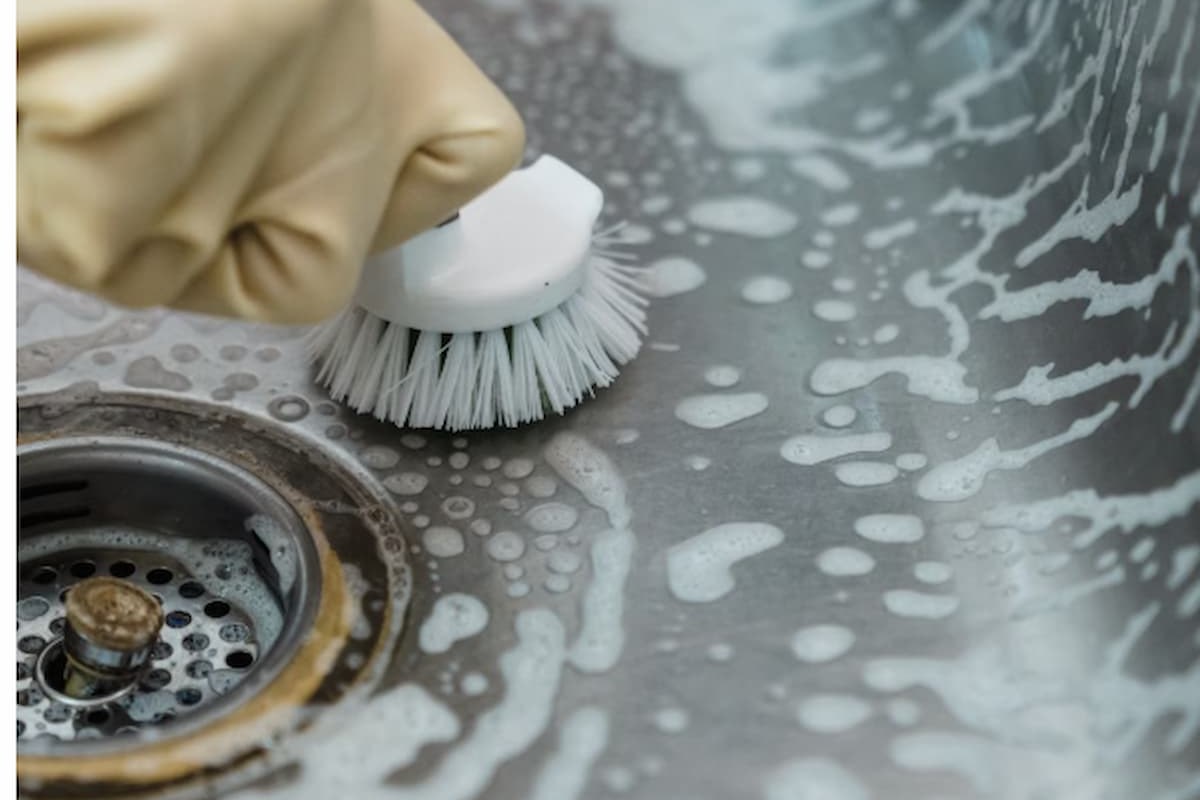
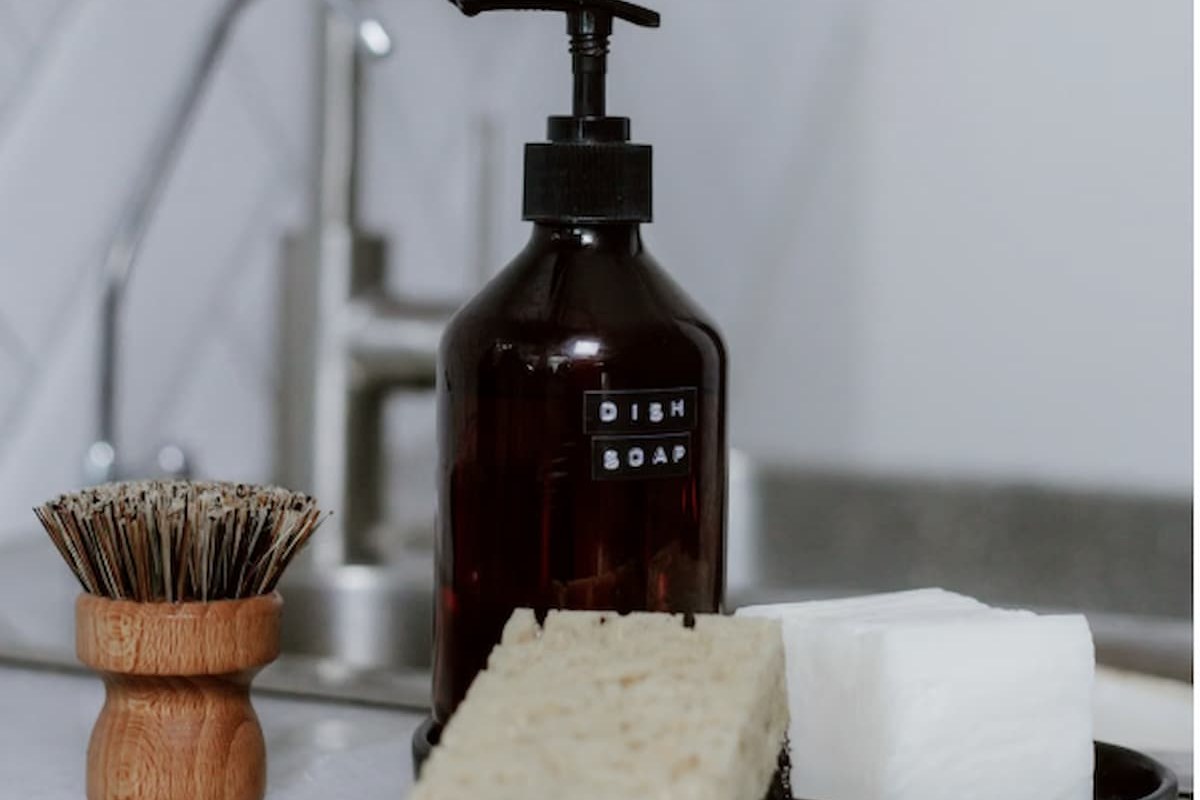
Sponges, dishcloths and brushes can spread germs as easily as they remove them. Illinois Extension recommends replacing sponges, dish rags and scrub brushes with clean ones every day if you can, and never using a sponge or cloth that has cleaned up spills on your dishes without cleaning and sanitizing it first. Ways to clean them include:
- Microwave the sponge. Soak it fully in water, put it in a microwave-safe bowl and heat for 1 minute. The extension cites USDA findings that this kills more bacteria than washing in the dishwasher. Use only sponges with no metal in them, and take care, because they’ll be very hot.
- Dishwasher. Run sponges through a dishwasher on a heated dry cycle. The extension says sponges should reach 155°F. Wash scrub brushes in the dishwasher too.
- Bleach soak. 3/4 cup bleach per gallon of water, 5 minutes, then rinse and air dry.
- Dishcloths and pot holders. Launder regularly on a hot cycle.
Weekly and monthly jobs
You don’t need to do everything every day. Illinois Extension gives two specific schedules:
- Weekly: wash and disinfect the kitchen sink, and wash the sink strainer.
- Monthly: sanitize the drain and garbage disposal by pouring 1 tablespoon of bleach mixed in 1 quart of water down the drain.
The extension gives no fixed schedule for other items, only that counters, work surfaces and appliances should be washed and sanitized regularly. A sensible plan, based on common practice, is to wipe the counters and stovetop daily, do a deeper clean of the sink and appliance fronts weekly, and handle the fridge, microwave, oven and cabinet interiors monthly or whenever they need it.
| How often | Jobs | Where it comes from |
|---|---|---|
| Daily | Wipe counters and stovetop | Common practice |
| Weekly | Wash and disinfect the sink; wash the sink strainer; deeper clean of appliance fronts | Illinois Extension (sink, strainer); common practice (appliance fronts) |
| Monthly | Sanitize the drain and disposal with 1 tablespoon of bleach in 1 quart of water; fridge, microwave, oven and cabinet interiors | Illinois Extension (drain); common practice (the rest) |
The fridge and the microwave
For the refrigerator, Illinois Extension’s method is to move perishables to a cooler, discard questionable food, remove shelves and drawers, wash everything, rinse with a diluted bleach solution (1 tablespoon per gallon of water) and dry completely before putting it back. For the microwave, avoid oven cleaner, steel wool and abrasives. To loosen caked-on food, boil a baking soda or lemon juice mixture in the microwave, let it cool with the door closed, then wipe it out. Our guide to storing fresh produce longer covers what to put where once the fridge is clean.
A simple schedule
- Every day (5 minutes): dishes, wipe counters and stovetop, rinse the sink, swap in a clean sponge or cloth.
- Every week (20 to 30 minutes): follow the top-to-bottom order, disinfect the sink, wash the strainer, wash the dishcloths, take out the trash can liner and wipe the can.
- Every month: sanitize the drain, clean the fridge and microwave, run a dishwasher cleaning cycle (see how to fix a smelly dishwasher), and wipe the cabinet fronts and handles.
If daily cleaning keeps slipping, a short evening routine might help more than a longer weekly session. We cover one in the 15-minute evening reset. And if cutting boards are part of your problem, see how to clean cutting boards.
Cleaning questions, answered
What order should I clean my kitchen in?
Work from top to bottom: cabinet tops and shelves, counters and small appliances, the stove and hood area, cabinet doors, the sink and faucet, then the floor. This is a practical habit rather than an official rule, and it keeps you from re-cleaning surfaces that dust or crumbs fall on.
What is the difference between cleaning and sanitizing?
Cleaning removes dirt and some bacteria with soap and water. Sanitizing is an extra step that kills remaining bacteria. University of Illinois Extension says to clean first, because food particles and grime can deactivate bleach.
How do I make a kitchen sanitizer with bleach?
Illinois Extension’s recipe, drawn from CDC guidance, is 4 teaspoons of unscented liquid bleach per quart of cool water, or 5 tablespoons per gallon. Apply it to a clean surface, let it air dry and make a fresh batch if it’s more than a day old. Check your bleach label and never mix bleach with ammonia.
How often should I replace or clean my kitchen sponge?
Illinois Extension recommends replacing sponges, dish rags and scrub brushes with clean ones daily. You can also sanitize a sponge by microwaving it wet for 1 minute (no metal), running it through a heated dishwasher cycle or soaking it in a bleach solution.
Can I use the same cleaner on every surface?
No. Marble, natural stone, wood, stainless steel, glass and laminate need different care. Check the maker’s instructions or test a hidden spot first, and use mild soap and warm water when you’re unsure.
What should I clean weekly and monthly?
Illinois Extension says to wash and disinfect the kitchen sink and wash the sink strainer weekly, and to sanitize the drain and disposal monthly. Other items have no set schedule, so many people wipe counters daily and do the fridge and microwave monthly.
Sources and further reading
The clean-then-sanitize order, bleach sanitizer amounts, the use of cool water, fresh batches, the weekly sink and monthly drain schedule, the refrigerator method and the microwave tip follow University of Illinois Extension’s cleaning and sanitizing, cleaning the kitchen and sanitize your home pages. The sponge guidance follows Illinois Extension’s guide to keeping sponges, dish rags and brushes clean. The top-to-bottom order, the daily and weekly rhythm and the advice to test products on a hidden spot are common practice and Fatih’s own habit, not extension guidance, and are labeled that way above. Bleach strength varies, so follow your product label.
Keep reading
 Kitchen · 7 min readHow to get rid of a smelly dishwasher, step by stepWhy a dishwasher smells and how to fix it: clean the filter, spray arms and door seal, run a safe cleaning cycle and keep the smell from coming back.
 Kitchen · 7 min readHow to keep cutting boards clean and odor-freeSimple steps to clean, sanitize and care for wood and plastic cutting boards.
 Kitchen · 9 min readHow to declutter a kitchen in one weekendA practical two-day plan to clear counters, sort cabinets and keep the kitchen tidy.