
How to set up a coffee and breakfast station in a small kitchen
Mornings are when a kitchen is at its most chaotic. The mugs are in one cupboard, the coffee in another, the sugar somewhere near the stove, and you are not at your best. A small, dedicated station fixes most of that by putting everything for your first hour in one place.
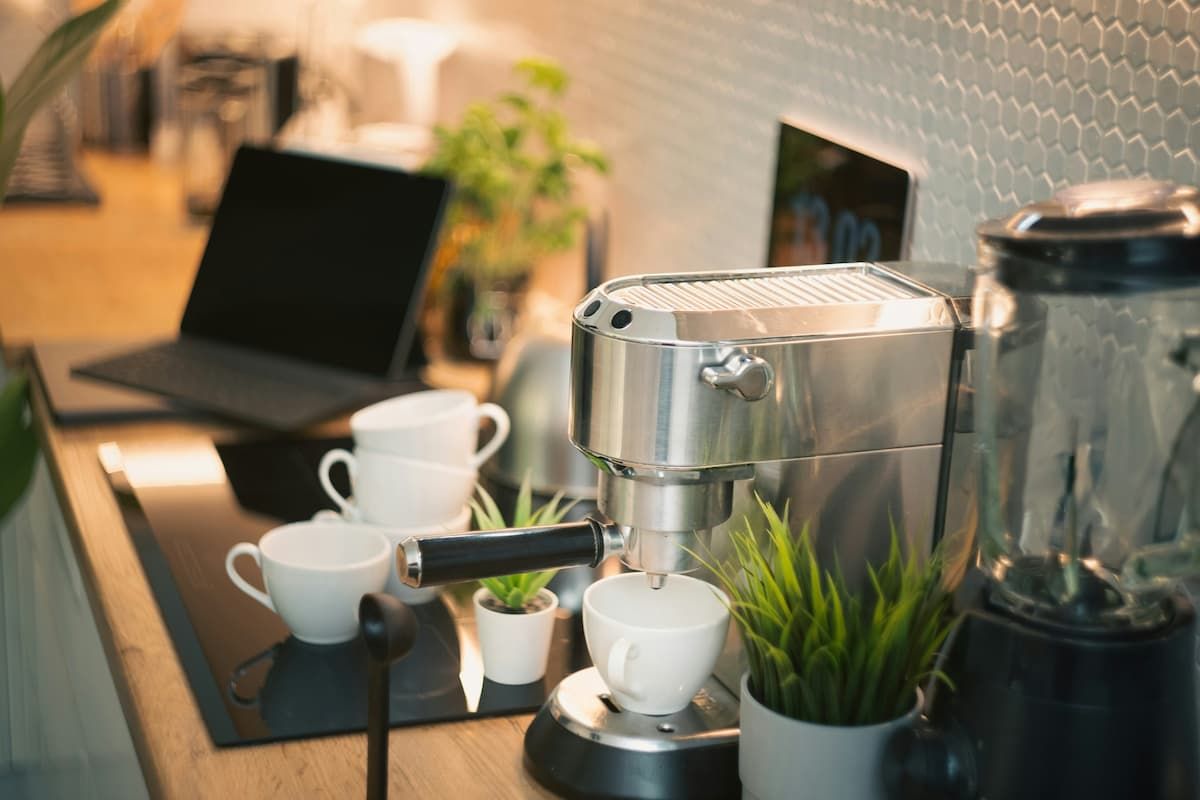
You don’t need a big kitchen or special furniture. A corner of the counter, a tray and a few habits are enough.
In this guide · 12 sections
Why a station works
The idea is simple: keep things where you use them. When the mugs, the coffee and the spoons sit together, you take two steps instead of ten. It also makes the rest of the kitchen quieter, because those items stop spreading across shelves and counters.
Choose the spot
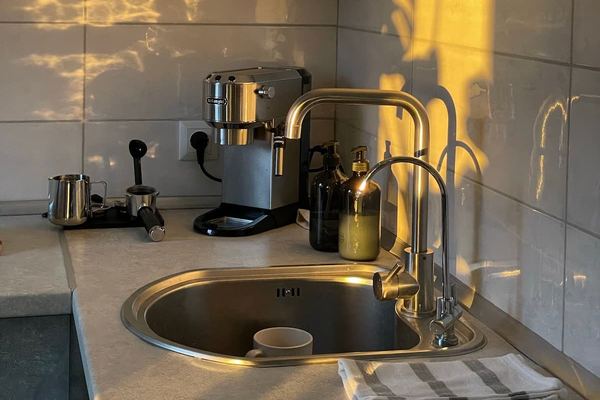
Look for a stretch of counter, or a shelf, that is close to the sink for water and close to an outlet. Keep it a little away from the stove, so steam and grease don’t reach your cups and coffee. A corner works well because it keeps the station out of your main work area. If you have no spare counter, a rolling cart or a shelf in a cabinet can do the job. See our guide to organizing kitchen cabinets for ideas on using the space you have.
Decide what lives there
Keep only what you use most mornings, and store the rest elsewhere.
| Item | Where | Why |
|---|---|---|
| Coffee maker or kettle | At the back, near the outlet | Keeps the cord short and tidy |
| Mugs (a few) | Within easy reach, at about chest height | So you don’t have to bend or stretch |
| Coffee, tea and sweetener | In closed containers on a tray | Corral small items and make wiping easy |
| Spoons and a small cloth | In a drawer or cup beside the station | Always where you need them |
| Breakfast staples (oats, bread, jam) | On a shelf or in a nearby cabinet | Same area, so breakfast takes fewer steps |
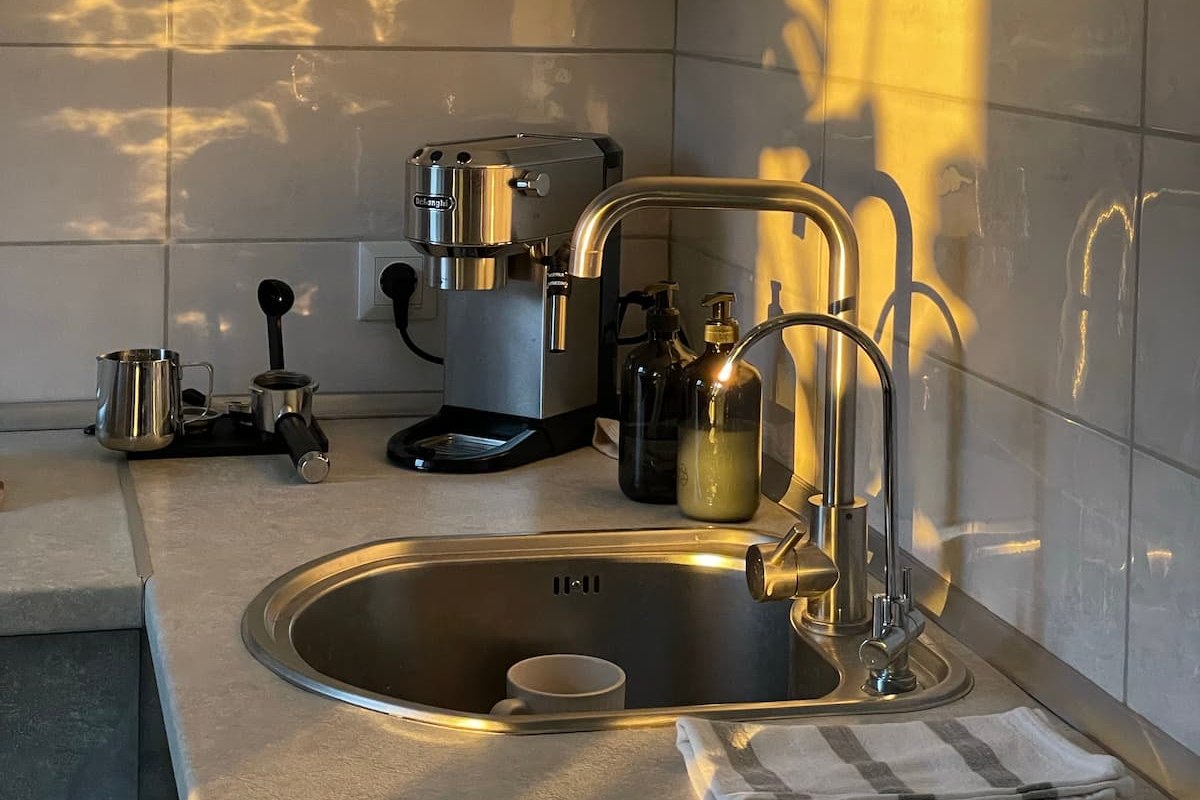

Keep it small
The usual way stations fail is by growing. A tray helps, because it marks the edge: if something doesn’t fit on the tray, it belongs somewhere else. Keep only what you will use in the next week or so, and store extras in the pantry. If you want help with tools, our guide to the kitchen tools a home cook actually needs shows which ones earn their place.
Set it up in about 30 minutes
- Clear the spot. Take everything off the corner or shelf and wipe it down.
- Gather the items. Collect the mugs, coffee or tea, sweetener, spoons and the machine from around the kitchen.
- Edit. Keep a few mugs and the daily staples. Move the rest back to cabinets and drawers.
- Arrange by reach. Put the machine at the back, mugs at easy height and the daily items on a tray in front.
- Test it tomorrow morning. Notice where you reach and where you hesitate, and move one thing if you need to.
Small-space variations
| Option | How it works | Good for |
|---|---|---|
| Rolling cart | A narrow cart holds the machine, mugs and staples and can tuck beside a cabinet | Renters, tiny kitchens |
| Cabinet shelf | Dedicate one shelf, and keep the machine on the counter only while it’s in use | Kitchens with deep cabinets |
| Tray on the counter | One tray marks the station and can be lifted for cleaning | Any kitchen |
| Wall shelf | Mugs and jars go on a wall shelf, freeing the counter | Kitchens with free wall space |
Whichever you choose, keep the station within reach of water and an outlet, and clear of the stove.
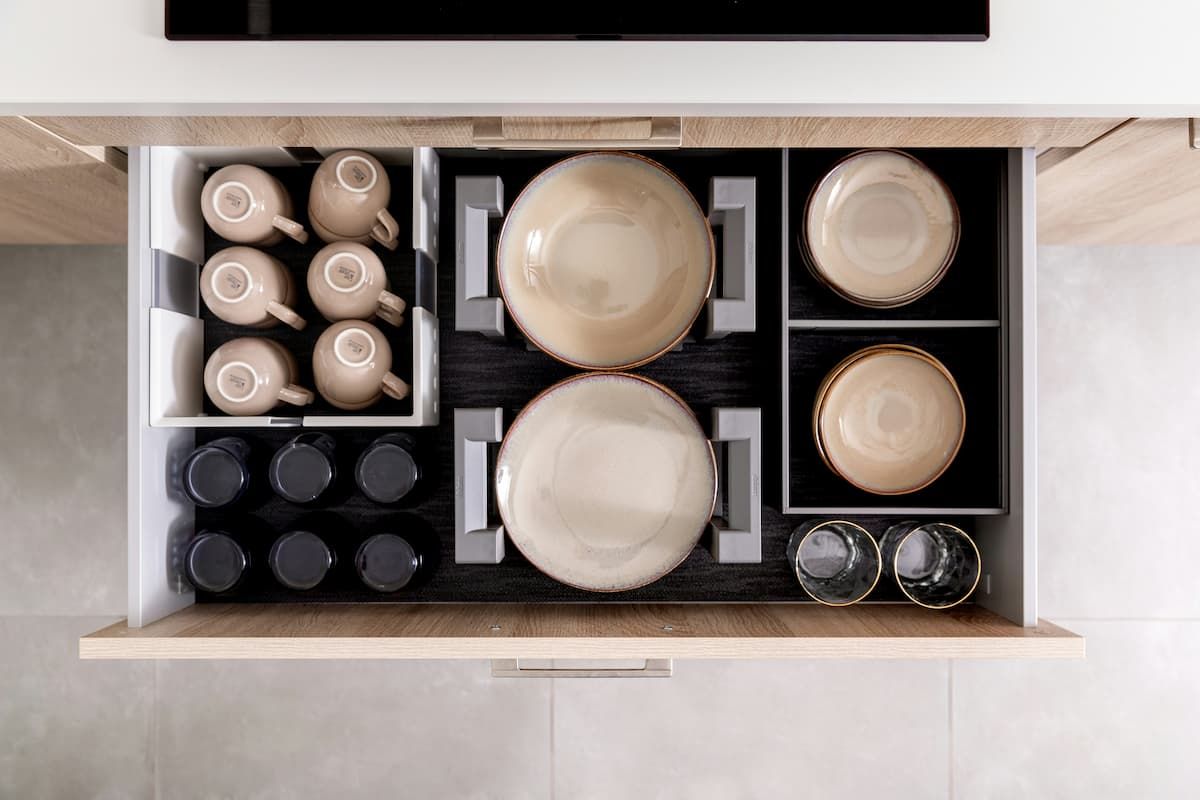
A few safety basics
A coffee station usually involves electricity near water, so use common sense. Keep cords away from the sink and from wet areas, wipe up spills promptly, and follow the instructions that come with your appliance, including how often to clean or descale it. If an appliance or a cord is damaged, stop using it. These are general safety habits, so the manual for your own machine comes first.
The breakfast side
A station isn’t only for coffee. Add the things that make breakfast faster: oats or cereal in a container, bread, jam and a few bowls. Keep what’s fresh in the fridge, and keep only dry staples at the station. If you want breakfast to stay low-effort, our guide to weekly meal planning shows how to include simple breakfasts in your list.
Keeping it clean
Wipe the tray and the counter around the station each day. Once a week, take everything off, clean underneath and put back only what belongs. Wash or run the machine’s removable parts as the manufacturer recommends. If something has been sitting unused for weeks, move it out. A station that isn’t edited slowly fills up with things you don’t use.
A two-minute reset
Station upkeep takes minutes. After breakfast, rinse the mugs, wipe the tray and put things back. A short routine like this is part of the 15-minute evening reset, which finishes the job the night before.
Station questions, answered
Where should a coffee station go?
Near the sink and an outlet, and a little away from the stove. A counter corner, a cart or a cabinet shelf all work.
How much should I keep at the station?
Only what you use most mornings, ideally on a tray. Store extras in the pantry.
What if I don’t have counter space?
Use a rolling cart, a shelf or the inside of a cabinet. A station can be a spot, not a piece of furniture.
Is it safe to keep a coffee machine near the sink?
Keep cords and the plug away from water, wipe up spills promptly and follow your appliance’s instructions. If anything is damaged, stop using it.
Can this work for tea drinkers?
Yes. Swap the coffee maker for a kettle and keep teas, mugs and a spoon together in the same way.
Sources and further reading
This guide is based on practical organizing principles rather than testing. Follow your appliance manufacturer’s instructions for use, cleaning and descaling. “Fatih’s note” boxes are his own working habits. Related guides link to their own sources.
Keep reading
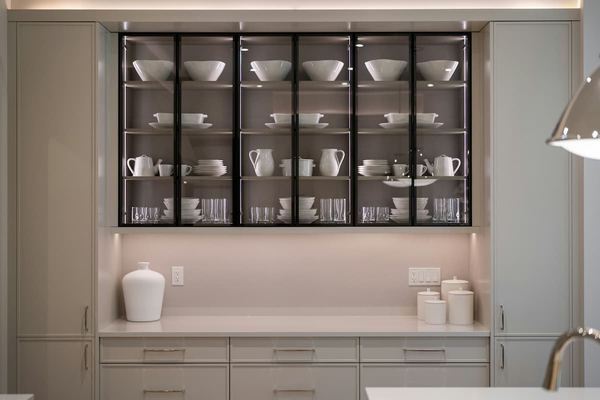 Kitchen · 12 min readHow to organize kitchen cabinets: 10 practical ways to gain more spaceTen practical ways to organize kitchen cabinets and gain space: work one cabinet at a time, set up zones, tame deep shelves and keep the order going.
 Home Organization · 7 min readThe 15-minute evening reset: a simple routine for a calmer homeA five-step 15-minute evening routine to keep your home tidy: counter, shared rooms, tomorrow’s clothes, trash and dishes, plus a weekly plan.
 Kitchen · 8 min readThe kitchen tools a home cook actually needsA short, honest list of the kitchen tools that matter, and which ones you can skip.