
Meal prep for beginners: a simple weekly routine
Meal prep has a reputation: twelve identical containers of chicken and broccoli, a whole Sunday gone. It doesn’t have to look like that. For most people the sweet spot is much smaller: a little cooking ahead, a few ingredients ready to grab, and a fridge that makes weeknights easier instead of harder.
Who this is for: anyone who has bought a stack of containers with big plans and given up by Wednesday. By the end you’ll have a two-hour weekly routine, a list of foods that hold up and the safety rules that keep it all safe to eat. If you’re new to planning, start with our 30-minute weekly meal plan and then come back here to cook it.
In this guide · 13 sections
- Decide how much prep you actually want
- Build a simple prep menu
- A two-hour Sunday routine
- Get set up before you start
- Cool it fast, then store it
- How long prepped food lasts
- A sample prep menu, with an Asian-style twist
- Label everything
- What preps well, and what doesn’t
- Reheating safely
- Keep it from becoming a chore
- Meal prep questions, answered
- Sources and further reading
Decide how much prep you actually want
“Meal prep” is really three different habits, and picking the right one saves you from burning out.
- Ingredient prep. You wash and chop vegetables, cook a pot of rice or grains, and mix a sauce, but you don’t assemble whole meals. This is the most flexible, and the best place to begin.
- Batch cooking. You cook one or two big dishes, like a soup or a tray of roasted chicken, and eat them over several days.
- Full meals in containers. You portion complete lunches or dinners. It’s the least flexible, but ideal for work lunches.
Start with ingredient prep for a week or two. Once it feels natural, add a batch dish. You’ll find out what your own week needs.
Build a simple prep menu
You don’t need a new recipe for every day. A formula works better: one grain, one or two proteins, two or three vegetables, one or two sauces. Then mix and match through the week.
- Grain: a pot of rice, quinoa or pasta. (Our guide to cooking rice on the stove covers the basics.)
- Protein: roasted or sautéed chicken, baked tofu, hard-boiled eggs or a pot of beans.
- Vegetables: one roasted tray, one raw crunchy option like chopped cabbage or carrots.
- Sauce: something that makes plain food interesting, such as a soy-ginger sauce or a simple vinaigrette.
The same ingredients can become a rice bowl on Monday, a wrap on Tuesday and a stir-fry on Wednesday. That’s variety without extra cooking.
A two-hour Sunday routine
- Take a quick inventory (10 minutes). Check what’s in the fridge and pantry, and use up what’s about to go.
- Start the longest job first (5 minutes). Get rice cooking, and put a tray of vegetables or chicken in the oven.
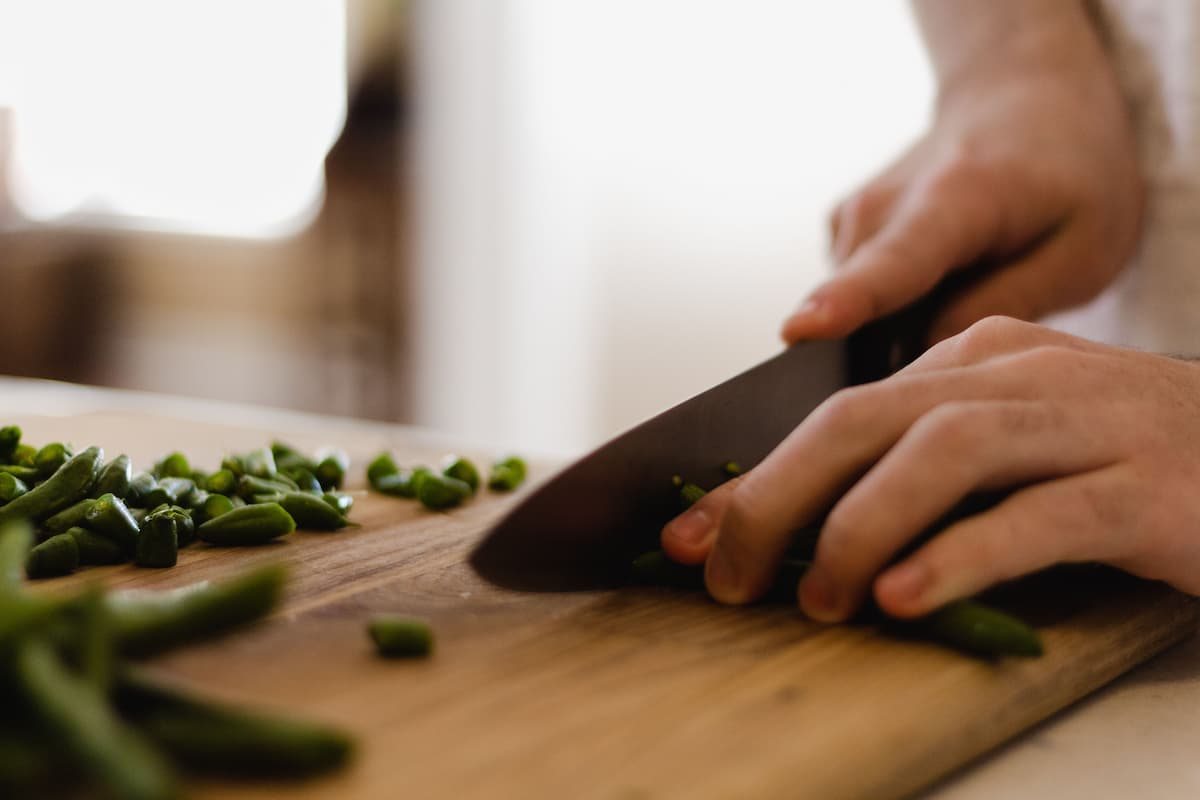
- Wash and chop (30 minutes). While things cook, prep vegetables and put them in containers.
- Mix the sauces (10 minutes). Shake a dressing in a jar or stir a sauce in a bowl.
- Finish the proteins (30 minutes). Cook the rest, or boil eggs.
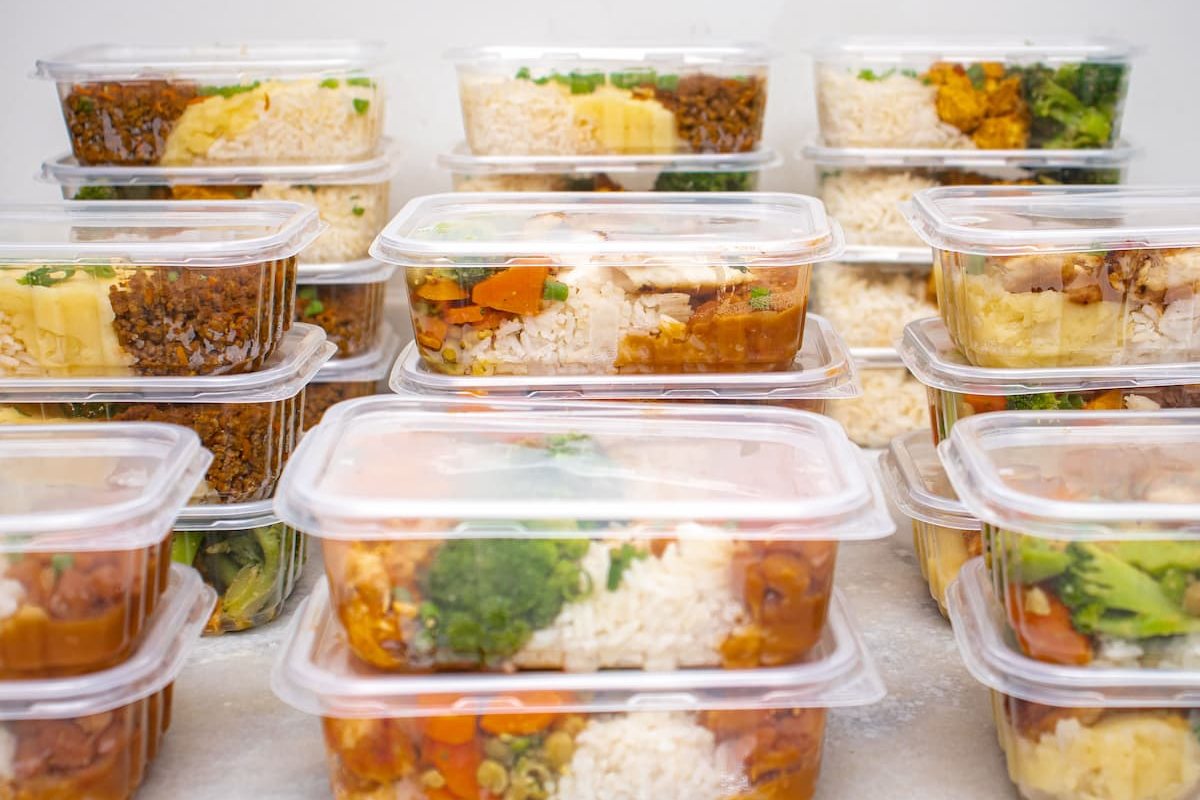
- Cool, portion and label (20 minutes). Get everything into containers, label with dates and clean up as you go.
Get set up before you start
Cooks use a French phrase, mise en place, which simply means “everything in its place.” Take out your cutting board, knife, containers and ingredients before you start. It sounds obvious, but it is what makes a two-hour job stay at two hours. If your cutting board or knives need attention, see our guides to keeping cutting boards clean and caring for kitchen knives.
Cool it fast, then store it
This is the part that matters most for safety. University of Minnesota Extension says leftovers should be refrigerated within 2 hours of cooking, and cooled in shallow pans less than two inches deep so they chill quickly. It also says the refrigerator should be at 36 to 38°F so food stays at 40°F or below. Don’t leave a hot pot on the counter to cool slowly, and don’t pile warm food into a deep container.
Cooked rice has its own rule. It should go in the refrigerator within an hour, as covered in our rice guide.
How long prepped food lasts
The number to remember is 3 to 4 days. Mississippi State University Extension says leftovers can be refrigerated for 3 to 4 days, with salads and seafood lasting about 3 days and cooked meats and vegetables up to 4 days. University of Minnesota Extension gives these guidelines:
| Food | Days |
|---|---|
| Soups and stews | 3 to 4 |
| Cooked meat, poultry dishes and casseroles | 3 to 4 |
| Pasta and potato salads | 3 to 5 |
| Gravy and meat broth | 1 to 2 |
This is why many people prep twice a week, a bigger session on Sunday and a smaller top-up on Wednesday, rather than cooking everything for seven days. Whatever you won’t eat by day 4 can go into the freezer right away. Mississippi State gives 4 to 6 months as a freezer window for leftovers, which is a good timeline for soups, stews and cooked grains.
A sample prep menu, with an Asian-style twist
Here is how the formula from earlier might look in real life. You don’t have to follow it, and it’s only meant to show how a few components stretch into several meals.
- Grain: a large pot of rice, or bulgur if you prefer.
- Protein: a tray of soy-ginger chicken thighs and a dozen hard-boiled eggs.
- Vegetables: roasted broccoli, plus a jar of shredded cabbage and carrots.
- Sauce: a soy, honey, garlic and ginger sauce, with sesame oil added at the end.
From that, you get a chicken and rice bowl on Monday, egg fried rice on Tuesday, a cabbage and chicken wrap on Wednesday and a quick stir-fry with the leftover broccoli on Thursday. Cook the chicken until it reaches 165°F, check it with a thermometer, and keep everything within the 3-to-4-day window.
Label everything
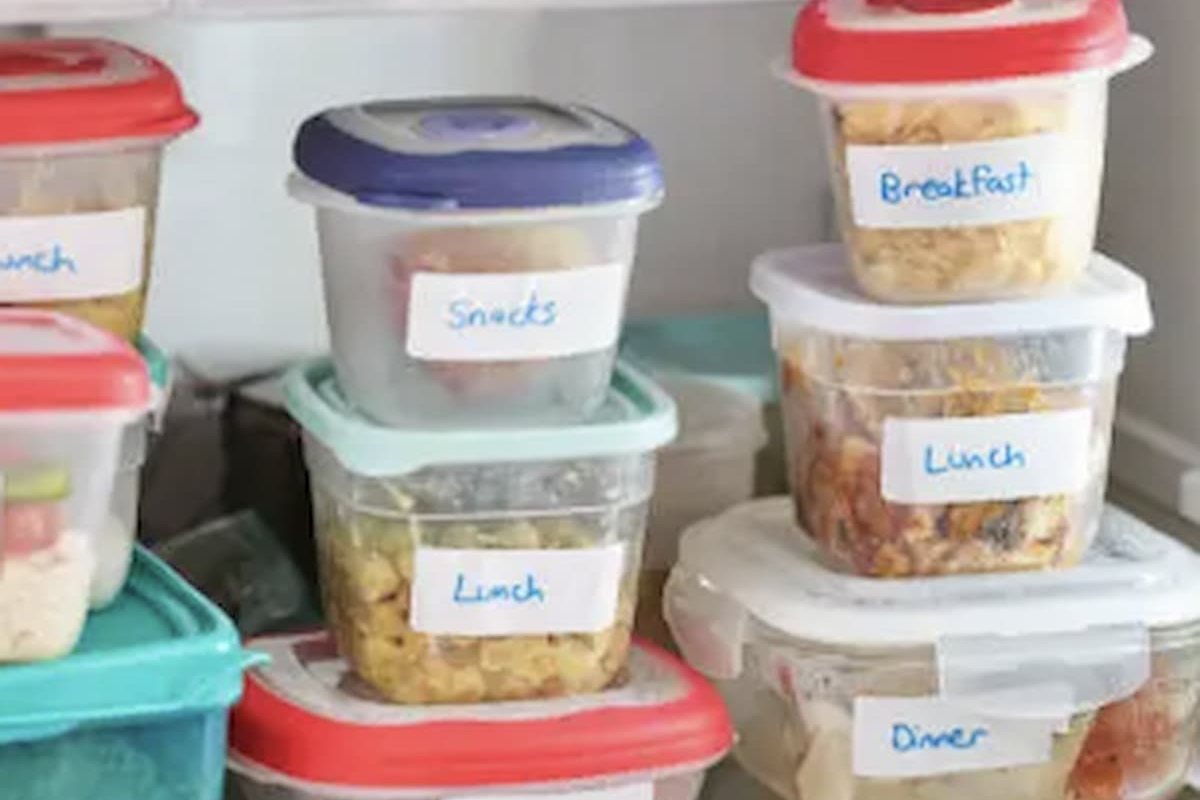
Write the contents and the date on each container with tape and a marker. Then use the oldest first, the “first in, first out” rule. Put the oldest dates in front, so you grab those first. It takes ten seconds and ends the daily “is this still good?” guessing game.
What preps well, and what doesn’t
- Holds up well: rice and grains, roasted vegetables, hard-boiled eggs, beans, soups, stews, shredded chicken, cut raw carrots, cabbage and peppers.
- Better added fresh: leafy greens (store dressing separately), sliced avocado, crispy toppings and anything you want to stay crunchy.
- Tricky: fried foods and delicate fish. They lose texture quickly. Fish and seafood also have a shorter window, about 3 days.
Reheating safely
University of Minnesota Extension’s reheating advice is practical: use a microwave-safe dish rather than a plastic tub such as a margarine or cottage cheese container, add a little liquid if needed, and cover with the lid or wrap loosened so steam can escape. Stir or rotate halfway, let it stand for 2 minutes, and check with a clean food thermometer that it has reached 165°F. If a container smells or looks off, don’t taste it. “When in doubt, throw it out.”
Keep it from becoming a chore
- Start small. Prep lunches only, or just the grains and sauce, for the first two weeks.
- Pick containers that stack. Matching sizes save a surprising amount of fridge space. See our pantry guide for ideas on containers.
- Cook what you actually like. A plan you don’t want to eat will not survive Thursday.
- Allow yourself a night off. Prep is a head start, not a contract.
Once this routine feels easy, the next step is to build prep into your weekly plan. Our weekly meal planning guide shows how.
Meal prep questions, answered
How long can I keep prepped meals in the refrigerator?
Plan on 3 to 4 days. Mississippi State University Extension says salads and seafood last about 3 days, and cooked meats and vegetables up to 4 days. Freeze anything you won’t eat by then.
How soon should I refrigerate cooked food?
Within 2 hours of cooking, according to University of Minnesota Extension, and within an hour for cooked rice. Cool food in shallow containers so it chills quickly.
What temperature should my refrigerator be?
University of Minnesota Extension says 36 to 38°F, so food stays at 40°F or below.
How do I reheat meal prep safely?
Use a microwave-safe dish, add a little liquid, cover with a loosened lid, stir halfway, let it stand for 2 minutes and check that it reaches 165°F.
Can I freeze meal prep?
Yes. Mississippi State University Extension lists 4 to 6 months for leftovers in the freezer. Label containers with the date and use the oldest first.
What is the easiest way for a beginner to start?
Begin with ingredient prep: cook a pot of rice, wash and chop vegetables and mix one sauce. Add a batch dish later when the routine feels natural.
Sources and further reading
Cooling, refrigerator temperature, storage times and reheating follow University of Minnesota Extension’s Storing and reheating leftovers. Labeling, 3-to-4-day refrigerator storage, freezer times and first-in-first-out follow Mississippi State University Extension’s Tips for Meal Prep Storage. The rice rule follows University of Wisconsin Extension’s Safe Handling of Cooked Rice. The Sunday routine and prep formula are practical suggestions, not extension guidance. “Fatih’s note” describes his own working habits.
Keep reading
 Everyday Meals · 10 min readHow to meal plan for a week in 30 minutesA realistic 30-minute method to plan a week of dinners: check what you have, pick themes, shop by section, prep ahead and store leftovers safely.
 Everyday Meals · 8 min readHow to cook rice on the stove, step by stepA simple stovetop method for fluffy white and brown rice, how to fix common problems, and how to store and reheat leftover rice safely.
 Everyday Meals · 10 min readStir-fry basics: a beginner’s guide to cooking in a wokLearn how to stir-fry at home: wok or skillet, heat and oil, prep, cooking order, a pantry sauce, tender meat and safe temperatures, with answers to common questions.